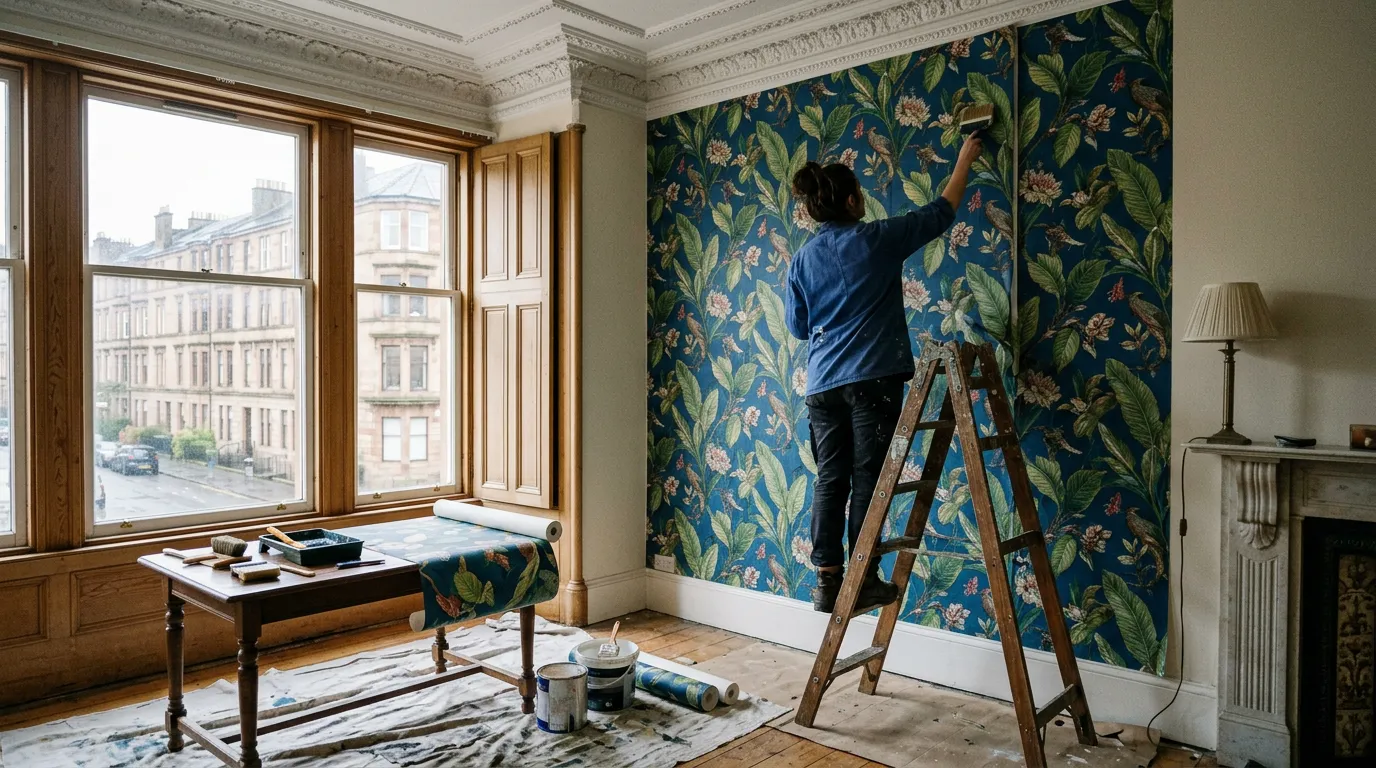
Professional wallpaper hanging costs about £30 a roll for plain paper, £45 for patterned and £60 for heavy or grasscloth (BestBuilders, Aug 2026), with a Glasgow room including stripping at £325–£775. Tall tenement ceilings often mean only two or three lengths per roll, so old plaster usually needs lining and extra rolls.
Wallpaper asks more of a wall, and of the person hanging it, than paint does. In Glasgow that matters, because so many homes have tall tenement ceilings, old lime plaster, cold outside walls and several decades of paper and paint already on them. This guide covers choosing a paper, working out how many rolls you need, getting old walls ready, how a professional hangs it, and what it costs, with Glasgow housing in mind throughout.
Is wallpaper a good choice for your room?
Wallpaper suits most rooms, but not every wall in every room. Before choosing a pattern, it helps to be clear on what paper does well and where paint is the better call.
Where wallpaper works well
- Bedrooms and living rooms. Low wear, little moisture, and the room is mostly looked at rather than scuffed. This is where paper gives the most for the money.
- Uneven older walls. A good paper over lining paper hides the hairline cracks and gentle undulations of old plaster far better than a flat emulsion, which shows every flaw in low winter light.
- Tall rooms. A pattern breaks up a big plain wall. Tenement rooms with 3 m ceilings can take a large-scale design that would swamp a modern box room.
- Feature walls. One papered wall gives most of the effect for a fraction of the cost. We cover this in its own guide: feature wall wallpaper: cost, papers and where it works.
Where paint is usually the better choice
- Bathrooms with poor ventilation. Constant steam lifts joints and encourages mould behind the paper. A vinyl paper can cope in a well-ventilated bathroom, away from the shower, but a good bathroom paint is the safer default.
- Cold outside walls with a condensation problem. Paper on a wall that is regularly wet with condensation will stain and lift. Sort the moisture first. Our guide to damp, condensation and mould explains how to tell which problem you have.
- High-traffic halls in busy households. Paint is easier to touch up. If you want paper in a hall, choose a scrubbable vinyl or keep the paper above a painted dado.
On cost, papering a room is normally dearer than painting it, because the paper itself costs money and hanging is slower than rolling emulsion. A typical room paint in Glasgow runs at £350–£600 including materials, according to BestBuilders Glasgow (August 2026). Wallpapering a room including stripping runs at £325–£775 for labour, from the same source, before you buy the paper. Our Glasgow painting and decorating prices guide has the full painting figures.

Which type of wallpaper should you choose?
The type of paper decides how it is hung, how long it lasts, how easily it comes off later, and what you will pay to have it hung. Here are the main types you will meet in a Glasgow showroom or online.
| Type | What it is | Best for | Watch out for |
|---|---|---|---|
| Non-woven (paste-the-wall) | A fabric-like backing that does not stretch when wet. You paste the wall, not the paper. | Most rooms. Tall tenement drops, because dry lengths are easier to handle. | Thin non-wovens show every bump. Line uneven walls first. |
| Traditional paper (paste-the-paper) | Printed paper that is pasted and left to soak before hanging. | Bedrooms and living rooms. Many classic and heritage designs. | It expands when wet, so soak times must be the same for every length or the joints will not meet. |
| Vinyl | A vinyl surface on a paper or non-woven backing. Wipeable or scrubbable. | Kitchens, halls, well-ventilated bathrooms, rentals. | Needs a fungicidal paste. Vinyl will not stick to vinyl, so overlaps need a special adhesive. |
| Blown vinyl and embossed papers | Raised texture. Anaglypta-type papers are designed to be painted. | Hiding poor walls, ceilings, below a dado. | Do not press joints flat with a hard roller or you crush the pattern. |
| Flock | A velvet pile on a paper base. | Formal rooms and feature walls. | Paste on the face is very hard to remove. Needs a careful, clean hang. |
| Grasscloth and natural fibres | Woven grass, jute or paper strands on a backing. | Feature walls and calm, textured rooms. | Shade varies from length to length and the joints always show. Not for kitchens or bathrooms. |
| Murals and panels | A printed scene supplied as numbered panels to fit a wall. | A single wall with a clear focal point. | The wall must be measured exactly before ordering. Panels are hung in a set order. |
| Lining paper | Plain paper graded by thickness (commonly 800 to 2000). | Under a decorative paper on old plaster, or painted over. | Must be fully dry before the top paper goes on. |
Paste-the-wall or paste-the-paper?
Paste-the-wall papers are quicker to hang, need no soaking, and do not stretch, so the joints stay where you put them. They usually strip off dry in whole lengths when you redecorate, which matters on fragile old plaster. Traditional papers are still the only option for many designs, and an experienced hanger has no trouble with them. On price, most decorators charge for paste-the-wall at the same per-roll rate as any other plain or patterned paper. The time saved is real, but it is small next to the preparation.
Original relief papers in older homes
Many Victorian and Edwardian homes in Glasgow still have Lincrusta, a heavy relief covering invented in the 1870s and made from linseed oil, on hall dados and sometimes in closes. It is very hard to replace like for like. If you have it, we would normally repair and repaint it rather than strip it.

Reading the label
The label on each roll tells you most of what you need to know. Read it before you buy, not when the decorator arrives.
- Free match (random match). No pattern to line up. The least waste, and the cheapest to hang.
- Straight match. The pattern lines up straight across from one length to the next.
- Offset match (half-drop). Each length is shifted by half the repeat. More waste, because every other length starts at a different point.
- Pattern repeat. The vertical distance before the design repeats, printed in centimetres. A 64 cm repeat wastes far more paper than an 8 cm one, especially under a tall ceiling.
- Batch or shade number. Rolls from different batches can be a visibly different colour once they are side by side on the wall. Buy every roll you need from the same batch, plus one spare, and keep the labels.
- Reverse alternate lengths. Common on plain papers and grasscloth. Turning every other length upside down evens out slight shading.
- Paste the wall or paste the paper, with the soak time for paste-the-paper types.
- Washable, scrubbable, strippable or peelable, which tell you how it will wear and how it will come off.
Decorator’s tip: Most manufacturers will not accept a complaint about paper that has already been hung. We open every roll and check the batch, shade and print before the first length goes up, then hang one length and look at it in daylight before carrying on. Do the same if you are hanging it yourself.

How many rolls of wallpaper do you need?
A standard UK roll is 10.05 m long and 53 cm wide. That is about 5.3 m² of paper, but you cannot simply divide the wall area by 5.3, because each roll is cut into full-height lengths and the offcuts are usually too short to use. In a Glasgow tenement, ceiling height changes the answer more than anything else.
The method we use
- Measure round the room at skirting level to get the perimeter.
- Divide the perimeter by 0.53 m and round up. That is the number of lengths you need.
- Work out the length of each drop: ceiling height (or height to the picture rail) plus 10 cm for trimming, plus one pattern repeat if the paper has one.
- Divide 10.05 m by that drop and round down. That is how many lengths each roll gives you.
- Divide the lengths needed by the lengths per roll and round up. Add one spare roll.
A door and an average window usually save about one roll in a small room. Large bay windows save more, though the cutting round them takes time.
Why tall ceilings need so much more paper
Here is a worked example for a room 3.5 m by 3.0 m (a 13 m perimeter, so 25 lengths), at different ceiling heights. It uses the full perimeter with no allowance for the door or window, and no spare roll.
| Ceiling height | Lengths per roll, plain paper | Rolls, plain paper | Lengths per roll, 53 cm repeat | Rolls, 53 cm repeat |
|---|---|---|---|---|
| 2.4 m (modern flat or new build) | 4 | 7 | 3 | 9 |
| 2.7 m (1930s semi, some cottages) | 3 | 9 | 3 | 9 |
| 3.0 m (smaller tenement rooms) | 3 | 9 | 2 | 13 |
| 3.2 m (typical tenement room) | 3 | 9 | 2 | 13 |
| 3.4 m and above (main tenement rooms) | 2 | 13 | 2 | 13 |
The jump happens because a 10.05 m roll gives three lengths only while each drop, trimming allowance included, is under 3.35 m. Go above that and you get two lengths per roll, with more than 3 m of each roll going in the bin. A patterned paper reaches that point much sooner. On a 3.2 m ceiling, a paper with a 53 cm repeat needs about 13 rolls where a plain paper needs 9.

Wide rolls change the sums. Some non-woven papers come 70 cm or more wide, and murals come as panels, so follow the maker’s own coverage figures for those. Our wallpaper hanging cost guide shows what these roll counts mean for the price.
Decorator’s tip: If your tenement room has a picture rail, papering below it and painting the frieze above brings the drop down to about 2.2–2.4 m. That usually gets you four lengths from each roll again, saves several rolls of an expensive paper, and suits the room’s proportions.
How should old walls be prepared before papering?
Preparation decides how the finished room looks far more than the hanging does. It is also where Glasgow homes differ most from the new-build walls that most online guides assume.
Stripping old paper
New paper should never go over old paper. The water in fresh paste softens the old paste underneath, and both layers can bubble or peel. Everything comes off first.
- Strippable and peelable papers come away dry, sometimes leaving a backing layer that can then be soaked off.
- Painted-over paper and woodchip are the slow ones. Paint seals the paper, so water and steam cannot get through until the surface is scored. Many Glasgow flats have several painted layers, and these can take a full day per room.
- Steam strippers are the usual tool, but they need care on old lime plaster, which softens if steamed too long in one spot.
Repairing the plaster
Once the paper is off, you see the real wall. In a tenement that often means hairline cracks, old filler, and patches of blown plaster that sound hollow when tapped. Outside walls in tenements are often plastered straight onto the stone (plaster on the hard), and internal walls are often lath and plaster. Both move a little and crack over time.
- Small cracks and dents are raked out, filled and sanded.
- Hollow, loose patches are cut back and repaired. Larger areas need a plasterer.
- New plaster must dry fully before papering. It is ready when it is evenly pale with no dark patches, which for a skim in a heated room is often a week or two, longer in winter or for deeper repairs.
Old paint, lead and textured coatings
Paint applied before the 1960s can contain lead, and it is common under paper and on woodwork in older Glasgow homes. Dry sanding it spreads lead dust, so do not sand old paint without testing it first. The British Coatings Federation publishes guidance on handling old lead paint safely. Textured coatings on walls and ceilings applied before 2000 can contain asbestos, so do not sand or scrape them; have them tested first.
Sizing and lining
- Sizing. Bare plaster is thirsty. A coat of diluted paste or a wallpaper primer stops the wall drying the paste too fast, and lets the paper slide into place.
- Lining paper. On old plaster we almost always line before hanging a decorative paper. It hides minor flaws, gives an even surface, and helps the top paper dry evenly. Lining paper is usually hung horizontally (cross-lining) so its joints never line up with the joints of the top paper. A 1000 or 1200 grade suits most walls; heavier grades hide more.
- Gloss and silk paint. Shiny paint is sanded to give a key so the paste can grip.
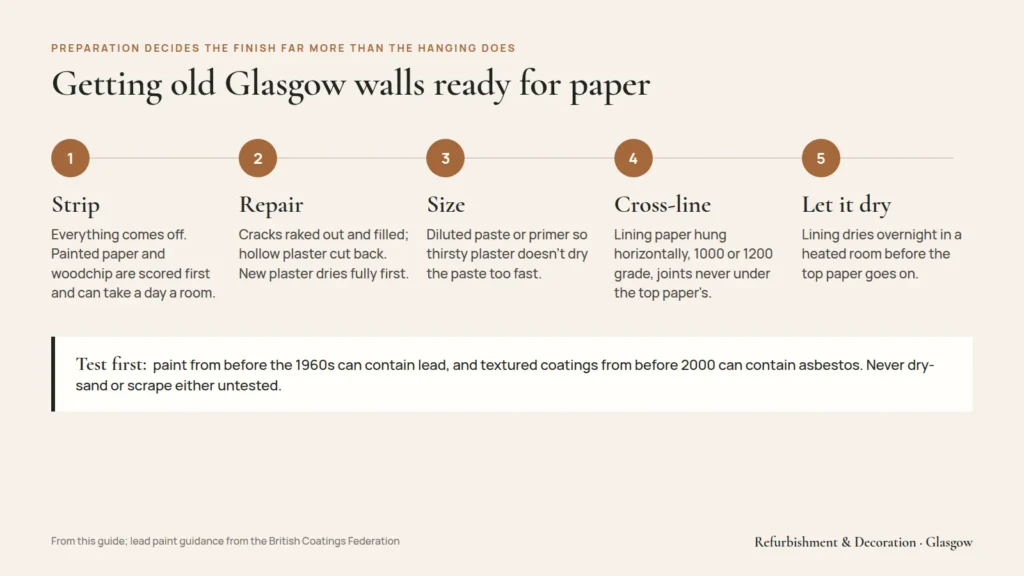
Decorator’s tip: Lining paper must dry fully before the top paper goes on, normally overnight in a heated room. Hanging on damp lining is one of the most common reasons for bubbles and open joints a week later.
How does a professional hang wallpaper?
Here is the order a careful decorator follows. Knowing it helps you judge a quote, and it helps if you are tackling a small room yourself.
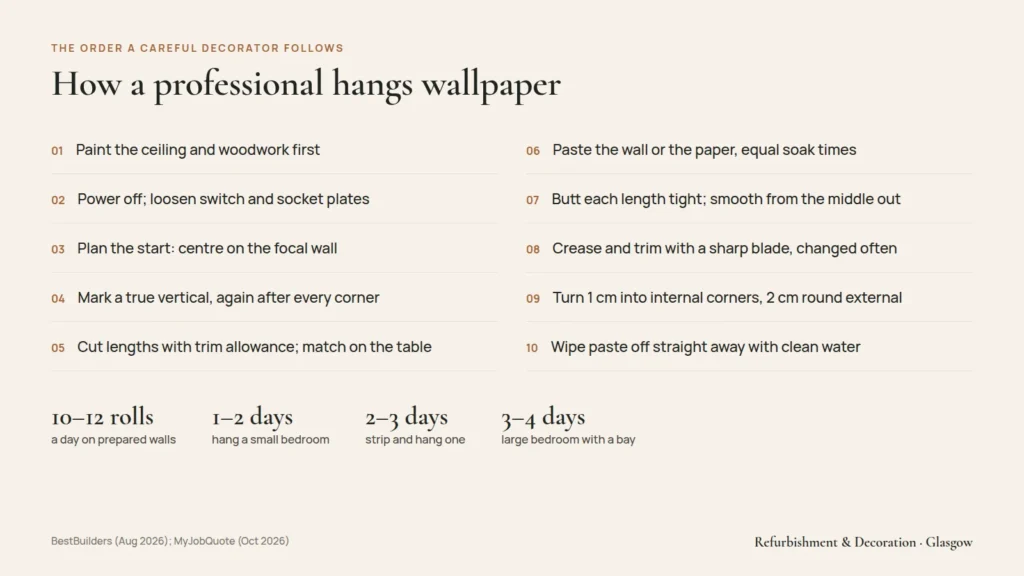
- Paint first. We normally paint the ceiling and woodwork before papering, so no paint ends up on new paper.
- Isolate the electrics. Power is switched off at the consumer unit before switch and socket faceplates are loosened, so the paper can be tucked neatly behind them.
- Plan the start point. On a chimney breast or other focal wall, the first length is centred so the pattern sits symmetrically. Elsewhere we start beside the main window and work away from it. The last joint, where the pattern will not match perfectly, is planned for the least visible corner, often behind the door.
- Mark a vertical. A plumb line or laser marks a true vertical for the first length. Walls and corners in older homes are rarely straight, so the line is re-marked after every corner.
- Cut and match. Lengths are cut with the trimming allowance, and the pattern is matched on the table before pasting.
- Paste. Either the wall or the paper, as the label says. Traditional papers are folded paste to paste (booked) and left for exactly the soak time on the label, the same for every length.
- Hang and smooth. Each length is butted tight to the last, not overlapped, and smoothed from the middle outwards to push out air.
- Trim. Top and bottom are creased into the cornice or skirting and trimmed with a very sharp blade, changed often. A blunt blade tears damp paper.
- Corners. At an internal corner, the paper turns only a centimetre or so onto the next wall, and the next length starts on a fresh vertical. At an external corner, it wraps round by a couple of centimetres.
- Clean as you go. Paste is wiped off the face, the ceiling and the woodwork straight away with clean water.
How long it takes
BestBuilders (August 2026) puts a decorator’s output at 10–12 rolls a day on prepared walls. MyJobQuote (October 2026) gives 1–2 days to hang a small bedroom, 2–3 days to strip and hang one, and 3–4 days for a large bedroom with a bay. Tall drops, heavy patterns and a lot of cutting round windows, radiators and sockets all slow things down.
After hanging
Let the room dry gradually. Keep it at a normal, comfortable temperature with a window slightly open, and avoid blasting heaters at fresh paper, which can make it shrink and open the joints. Small bubbles in traditional papers often flatten as they dry overnight.
Papering the tricky rooms in Glasgow homes
Most of the extra time on a Glasgow job goes into a handful of awkward features. Here is how we deal with each.
Tall tenement walls
On a 3.2 m or higher wall, each length is long, heavy and awkward when wet. It needs a proper platform or hop-up rather than a stepladder, and often two people for traditional papers. Paste-the-wall papers make life easier here, because the dry length is fed straight from the roll.
Cornices and ceiling lines
Old cornices and ceiling lines are rarely level. If the paper runs right up to an uneven cornice, a strong horizontal pattern can drift visibly across the wall. We match the pattern to the eye at the most visible point and trim to the cornice line, or recommend stopping at the picture rail.
Bay windows
The bays found in many Southside and West End tenements, and in plenty of semis, are mostly short lengths, reveals and corners. They take far longer than their size suggests and use more paper.
Chimney breasts and alcoves
Chimney breasts are the natural focal point of many Glasgow rooms. The pattern is centred on the breast, then carried into the alcoves either side. If a disused chimney has been capped without ventilation, damp patches can appear on the breast, so check for staining before papering it.
Halls and stairwells
Stairwells in houses can have drops of 4–5 m, which may give only one or two lengths per roll. They need staging or a stair platform. BestBuilders (August 2026) allows £80–£400 extra for tall rooms or stairwells.
Kitchens and bathrooms
Use a vinyl or other washable paper with a fungicidal paste, keep it away from direct splashing, and make sure the extractor works. If you can see condensation running down the walls in winter, deal with that first.

What does wallpaper hanging cost in Glasgow?
R&D’s own wallpaper prices are not published yet. These are current market figures, with sources, to help you judge a quote. Our wallpaper hanging cost guide for Glasgow has worked examples and the full breakdown.
| Item | Market range | Source |
|---|---|---|
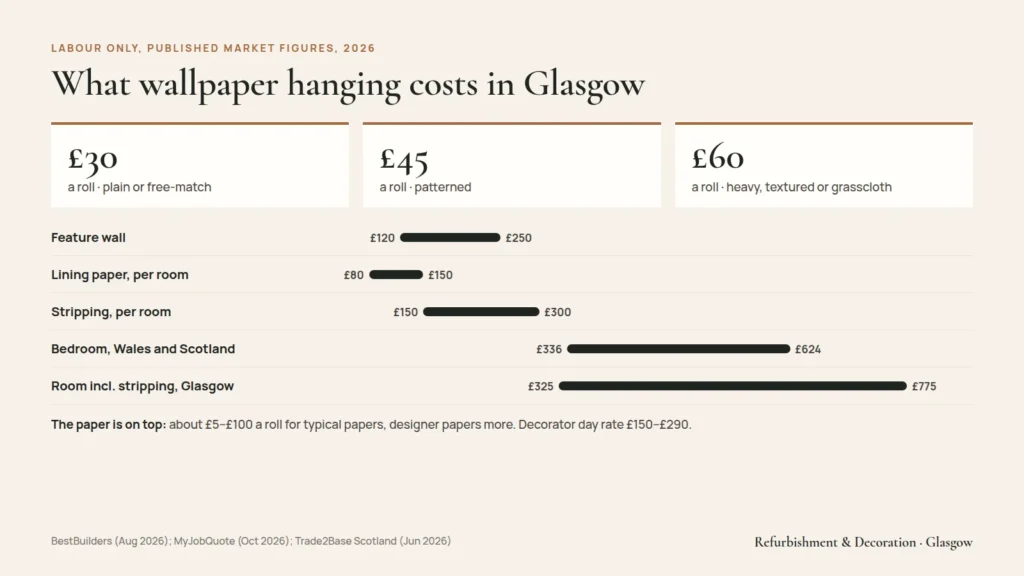
| Hanging plain or free-match paper | £30 a roll | BestBuilders (Aug 2026) |
| Hanging patterned paper | £45 a roll | BestBuilders (Aug 2026) |
| Hanging heavy, textured or grasscloth paper | £60 a roll | BestBuilders (Aug 2026) |
| Wallpaper a bedroom, Wales and Scotland | £336–£624 | BestBuilders (Aug 2026) |
| Wallpaper a room including stripping, Glasgow | £325–£775 | BestBuilders Glasgow (Aug 2026) |
| Stripping old paper | add £150–£300 a room | BestBuilders (Aug 2026) |
| Lining paper | add £80–£150 a room | BestBuilders (Aug 2026) |
| Feature wall | £120–£250 | MyJobQuote £120–£180 (Oct 2026); BestBuilders £140–£250 (Aug 2026) |
These figures are for labour. The paper is on top, and it varies enormously: MyJobQuote (October 2026) lists printed papers at £5–£20 a roll and paste-the-wall papers at £15–£50, while BestBuilders (August 2026) quotes £25–£100 a roll for the papers people typically choose. Designer papers can cost a good deal more.
Usually you choose and buy the paper, and the decorator tells you how many rolls to order. We check the roll count against the room before you order, so you are not left short with a batch that has sold out.
For comparison, decorators in Glasgow and Scotland charge about £150–£290 a day, according to BestBuilders Glasgow (August 2026) and Trade2Base Scotland (June 2026). Specialist paperhanging, such as murals and expensive papers, is charged at more. For more on rates, see our guide to painting and decorating prices in Glasgow.
Mistakes to avoid
Most failed wallpaper jobs come down to the same few errors. All of them are avoidable.
- Ordering too few rolls. Standard calculators assume a 2.4 m ceiling. In a tenement, work it out by lengths, as above, and add a spare from the same batch.
- Mixing batches. A slight colour difference between batches is very obvious across a joint.
- Papering over old paper. It may look fine for a week, then bubble as the old paste lets go.
- Skipping lining on old plaster. Thin modern papers show every crack and bump, and old plaster has plenty of both.
- Uneven soak times. With traditional papers, one length left soaking longer than the next will be a different width, and the joints will not close.
- Trusting the corner. Corners in older homes are rarely plumb. Re-mark a true vertical after every corner, or the pattern will lean.
- Papering a damp wall. Mould grows behind paper you cannot see through. Find the cause of any damp first.
- Drying too fast. High heat straight after hanging shrinks the paper and opens the joints.
- Not checking the first length. Look at it in daylight before the second goes up. After that, the maker is unlikely to accept a claim.
- Leaving the hardest room till last for DIY. If you want to try it yourself, start with a small, square room with a plain paper. Leave tall stairwells, grasscloth and murals to a professional.

Choosing a wallpaper hanger in Glasgow
Most painters and decorators hang wallpaper, but experience with difficult papers and old walls varies a lot. Ask a few direct questions before booking.
- Have you hung this type of paper before? Grasscloth, flock and murals need experience. Ask to see photos of similar work.
- What preparation is included? Stripping, filling, sizing and lining should each be listed, or clearly excluded.
- How many rolls will I need? A good decorator measures the room and gives you a number, rather than leaving you to guess.
- Is the price per roll, per room or per day? All three are normal. What matters is knowing which, and what it covers.
- Do you have public liability insurance? Any decorator working in your home should.
Our guide to planning a redecoration and choosing a decorator in Glasgow covers written quotes, deposits and timings in more detail. If your home is a tenement flat, our tenement painting guide covers ceilings, cornices and sash windows.

Getting a price for your home
Every room is different: the height, the state of the plaster, how many layers are on the walls, and the paper you have chosen all change the price. We can give you a guide price over the phone, then a fixed written quote after a free visit, including the number of rolls to order. You can see what is included on our wallpaper hanging service page, and we work across Glasgow and Central Scotland.
Call us on 07777 780557, or book a free visit.
Questions people ask
Do I need lining paper before wallpapering a tenement flat?
Usually, yes. Old lime plaster in tenements tends to have hairline cracks, filler patches and gentle undulations that show through modern papers, especially in low winter light. Lining paper, normally hung horizontally so its joints never line up with the top paper, gives an even surface and helps the paper dry evenly. BestBuilders (Aug 2026) puts lining at £80–£150 extra per room.
Can old wallpaper be removed without damaging the plaster?
Mostly, with care. Strippable papers peel off dry. Painted paper and woodchip must be scored so steam can get through, and steam needs to be used sparingly on old lime plaster, which softens if steamed too long in one place. Some loose plaster usually shows itself once paper is off, and that is repaired and left to dry before any lining or papering.
Is paste-the-wall wallpaper cheaper to have hung?
Not usually by much. Paste-the-wall papers are quicker to hang because there is no soaking and they do not stretch, and they are easier to handle on tall tenement drops. Most decorators still charge for them at the normal per-roll rate for plain or patterned paper, because preparation, cutting and trimming take the same time whatever the paper.
How long does it take a decorator to wallpaper a room?
BestBuilders (Aug 2026) puts a decorator's output at 10–12 rolls a day on prepared walls. MyJobQuote (Oct 2026) gives 1–2 days to hang a small bedroom, 2–3 days to strip and hang one, and 3–4 days for a large bedroom with a bay. Lining paper adds an overnight wait before the top paper can go on.
Who buys the wallpaper, me or the decorator?
Usually you choose and buy the paper, and the decorator supplies paste, lining paper and sundries. Ask the decorator to measure the room and confirm the roll count before you order. Buy every roll from the same batch, plus one spare, because rolls from a different batch can be a slightly different shade on the wall.
Can you wallpaper a bathroom or kitchen?
Yes, with the right paper and a well-ventilated room. Use a vinyl or other washable paper hung with a fungicidal paste, keep it away from direct splashing, and make sure the extractor fan works. In a bathroom with poor ventilation or a wall that runs with condensation in winter, a good moisture-resistant paint is the safer choice.
Why do decorators say not to paper over old wallpaper?
The water in fresh paste softens the old paste underneath. Both layers can then bubble, lift at the joints or peel away, sometimes a week or two after hanging. Stripping back to the plaster, repairing it and lining it takes longer at the start, but it is the only way to get a finish that lasts.
Is wallpaper more expensive than painting a room?
Normally, yes. In Glasgow a typical room repaint runs at £350–£600 including materials, while wallpapering a room including stripping runs at £325–£775 for labour alone (both BestBuilders Glasgow, Aug 2026), with the paper on top. Papering one feature wall and painting the rest keeps most of the effect for much less.

Painters and decorators working across Glasgow & Central Scotland, specialising in interior painting and wallpaper hanging. Prices in our guides are reviewed every year.
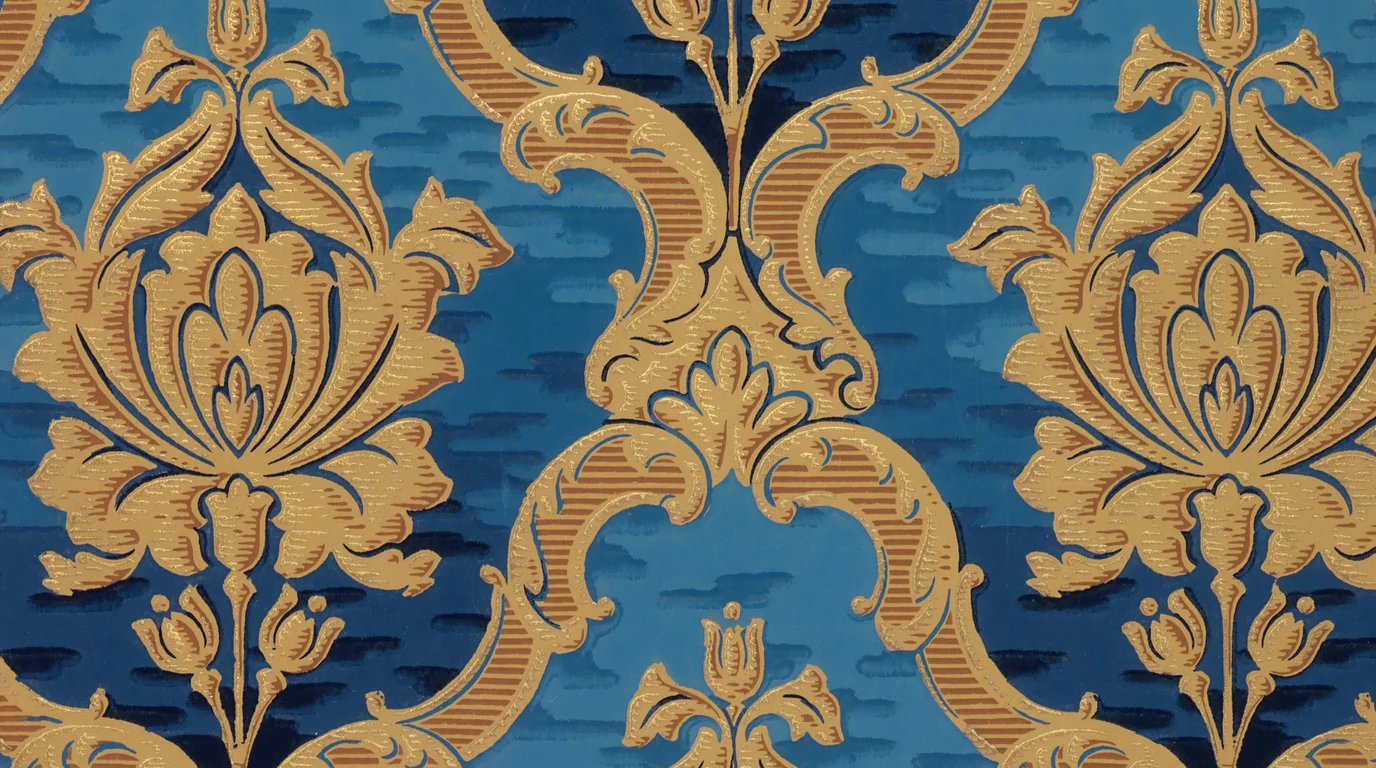 Feature Wall Wallpaper: Cost, Papers & Where It Works
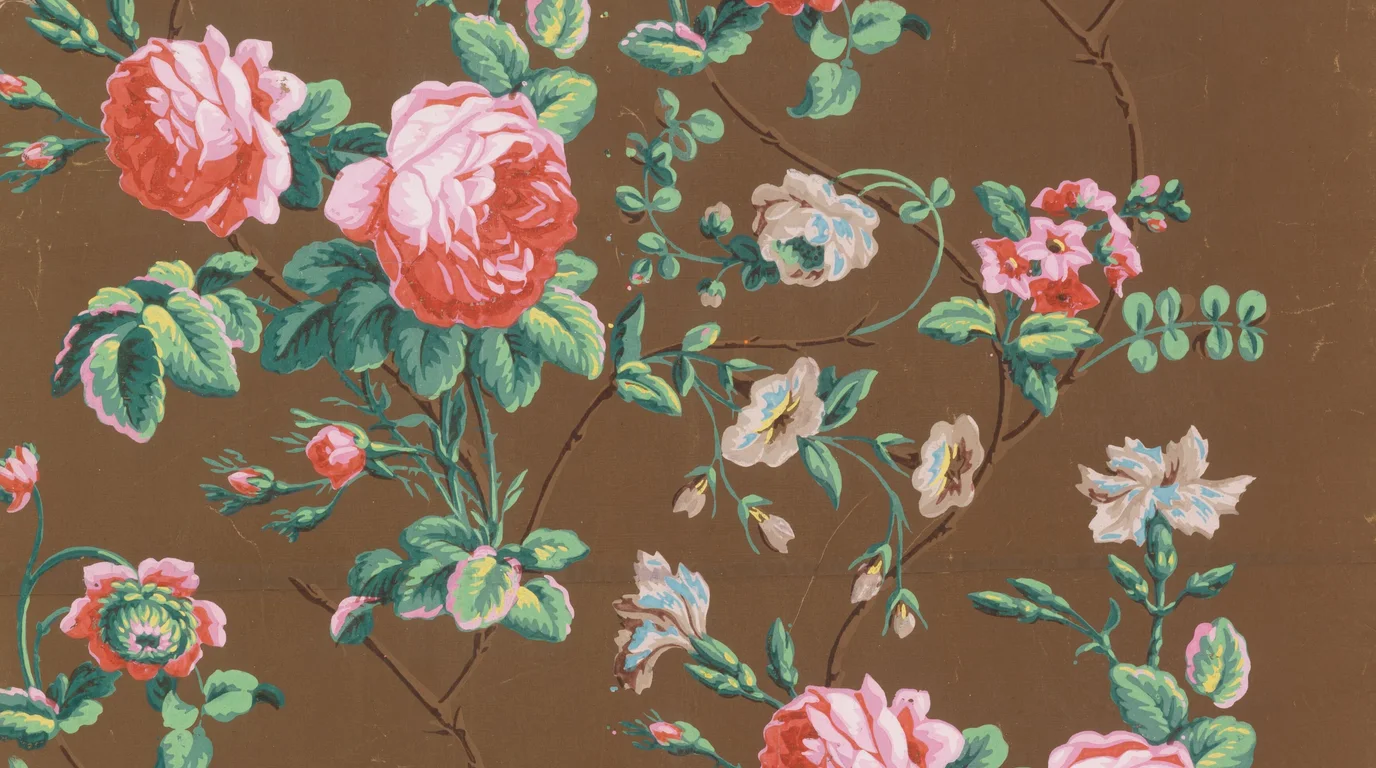 Wallpaper Hanging Cost in Glasgow: per Roll, per Room, per Feature Wall