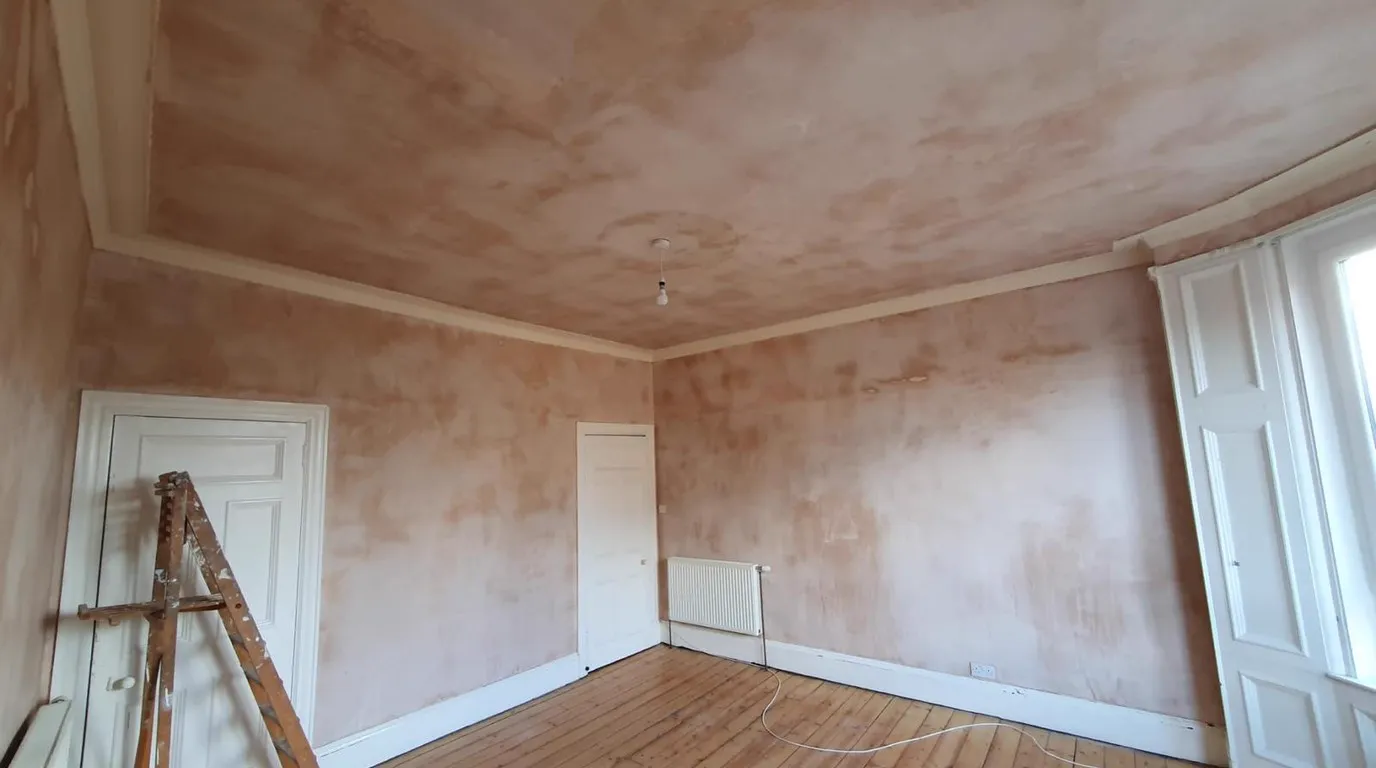
New plaster is ready to paint once it has dried from dark pink to an even, light pink with no dark patches, commonly a week to ten days for a skim, longer in a Glasgow winter. Start with a mist coat of matt emulsion, about 3 or 4 parts paint to 1 part water, then topcoats.
Fresh plaster is the most absorbent surface a decorator ever paints, and the most unforgiving if it is rushed. Paint it too early or with the wrong first coat and you get peeling, patchy sheen and walls that need redoing within months. This guide covers how long new plaster must dry, what a mist coat is and how to mix one, why vinyl silk fails on it, and what it costs in Glasgow, with a section for flats that have been rewired or replastered.
How long must new plaster dry before you paint it?
A skim coat of finishing plaster over plasterboard is commonly left for about a week to ten days before the first coat, and longer in a cold, damp room. Treat that as a rule of thumb, not a guarantee. The plaster tells you when it is ready, and the plasterer or the manufacturer’s data sheet has the final say for the product used.
How to tell it is dry
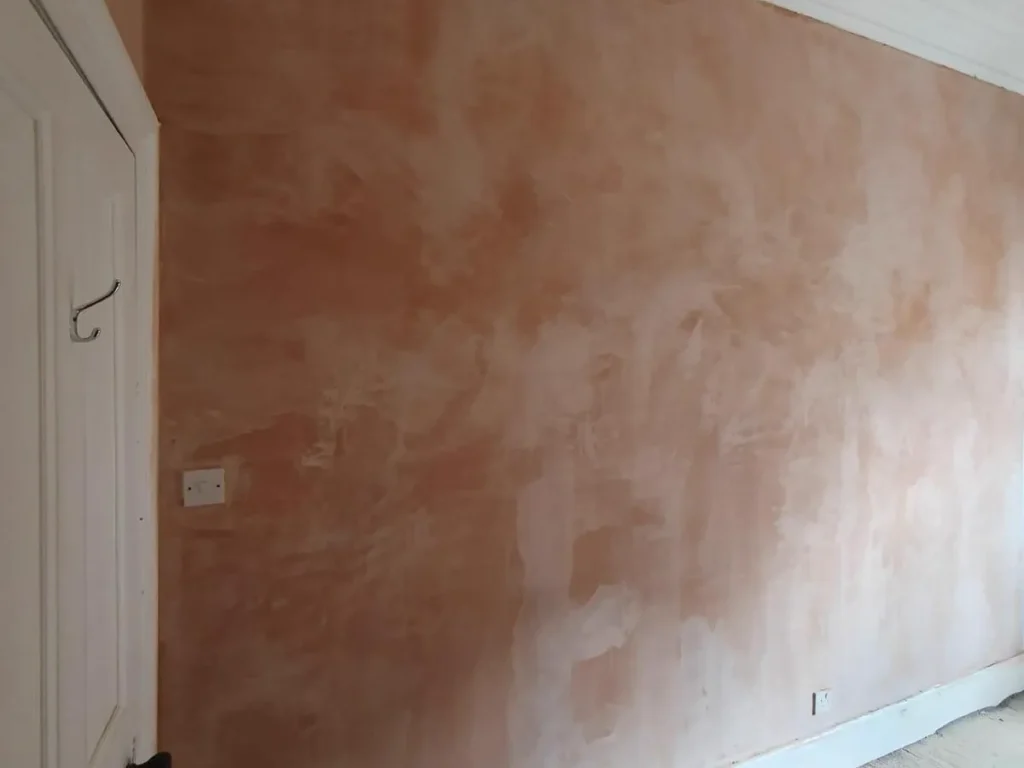
Most gypsum finishing plasters go on a dark pink or grey-pink and dry to a pale, even pink. Judge it by colour:
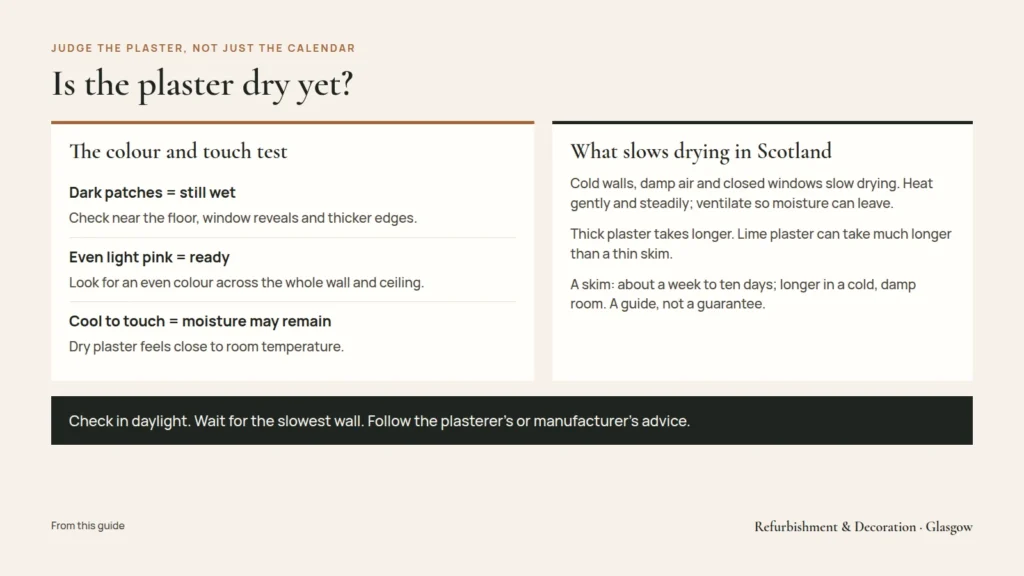
- Dark patches are still wet. Look along the wall, near the floor, round window reveals and at the edges where the plaster is thickest.
- An even, light colour across the whole wall and ceiling means it is ready for a mist coat.
- Cool to the touch often means moisture is still in the wall. Dry plaster feels close to room temperature.
Check in daylight, not under a work lamp, which flattens the colour difference. If one wall is lighter than another, wait for the slow one. Do not start on the dry walls and hope.
What slows drying in Scotland
Plaster dries by losing water into the air, so it needs warmth and moving air. In a Glasgow winter it gets neither for free. Cold walls, closed windows and damp air can stretch the wait well beyond a fortnight. Our guide to painting a house interior in winter in Scotland covers the conditions in detail.
- Heat gently and steadily. Normal central heating is enough. Blasting a room with a fan heater can dry the surface faster than the body of the wall, which risks cracking and uneven drying.
- Ventilate. Open windows for part of the day so the moisture leaves the room. A dehumidifier helps in a sealed flat.
- Thick plaster takes longer. A thin skim over plasterboard dries far faster than a full-thickness backing coat on masonry or old lath, and traditional lime or sand and cement plaster can take much longer again. Ask your plasterer what was used.
Decorator’s tip: Tell us the date the plasterer finished and what heating the flat has had since. It tells us more than a guess at the calendar, and we will look at the walls before we start.
What is a mist coat and how do you make one?
A mist coat is a watered-down first coat of emulsion that soaks into bare plaster and seals it. It stops the plaster drinking the moisture out of your topcoats, and it gives the finish something to grip. Without it, the paint dries too fast, looks patchy and can flake.
The mix
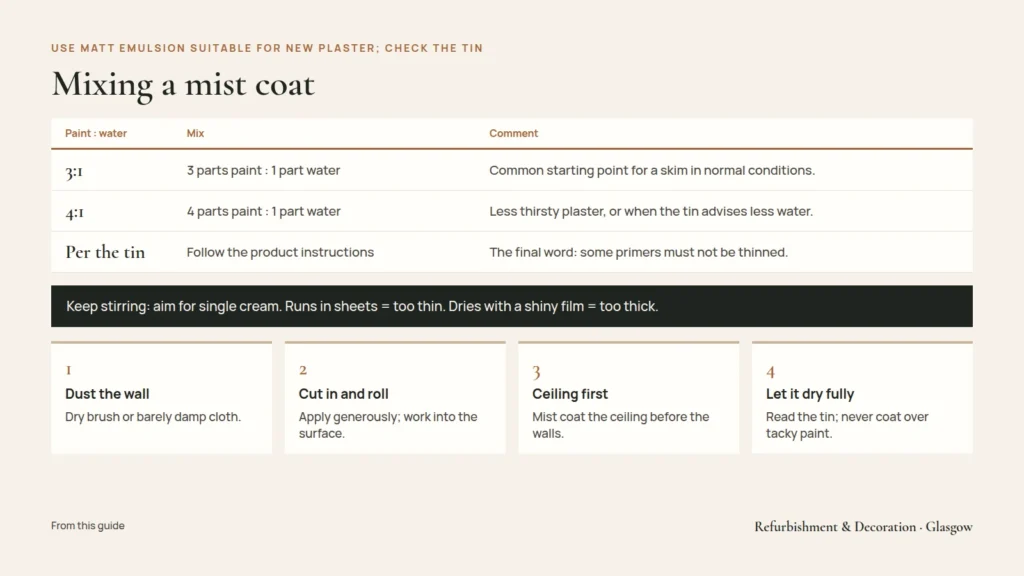
Use a matt emulsion made for new plaster, or an ordinary trade matt. Contract matt is the usual choice, because it is cheap, soaks in well and is made to be thinned. Do not use a silk or a vinyl soft sheen for the mist coat. As a starting point, about three or four parts paint to one part clean water is typical. Some makers recommend a different ratio, and some sell a dedicated new plaster primer, so check the tin or the data sheet and follow it.
| Paint | Water | Comment |
|---|---|---|
| 3 parts | 1 part | A common starting point. Works well on a skim in normal conditions. |
| 4 parts | 1 part | Thicker, for plaster that is less thirsty, or when the tin advises less water. |
| Per the tin | Per the tin | Always the final word. Some primers must not be thinned at all. |
Mix it well in a bucket and keep stirring. It should be about the consistency of single cream and run off a stick without being watery. If it runs down the wall in sheets, it is too thin. If it dries with a shiny film, it is too thick.
How it goes on
- Dust the wall with a dry brush or a barely damp cloth. Fresh plaster sheds powder.
- Cut in and roll on a generous coat with a roller. Work the paint into the surface rather than leaving it sitting on top.
- Do the ceiling first. Ceilings take a mist coat too, and are usually done before the walls.
- Let it dry fully. The drying time depends on the paint and the room, so read the tin. A mist coat that is still tacky under the next coat is a common cause of problems.
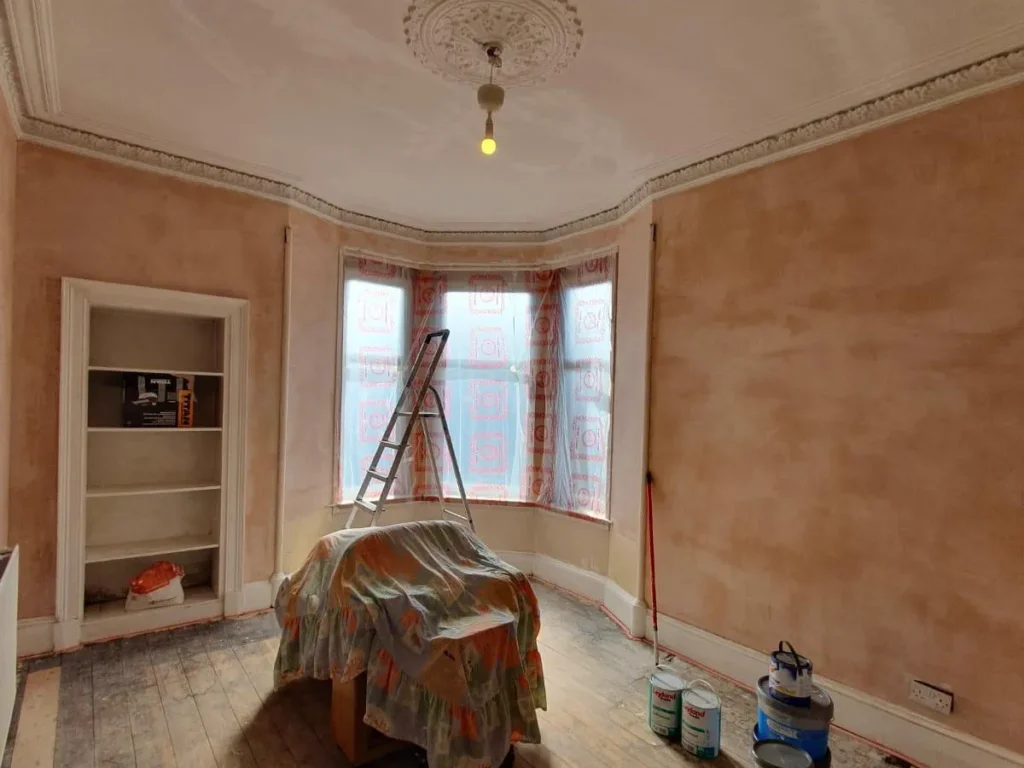
Filling and sanding after a skim
A good plasterer leaves a smooth finish, but there are always a few ridges, pinholes and trowel marks. We fill and sand after the mist coat, not before. A coloured, sealed surface shows every flaw under the light, which bare plaster hides. Fill what you can see, let the filler dry, sand lightly with a fine paper, dust off, and spot-seal the patches before the next coat. Use a good dust extractor or damp wipe, because plaster dust gets everywhere and spoils a wet topcoat.
Do not sand heavily. Finishing plaster is a thin layer, and you can cut through it.
Why does vinyl silk peel on new plaster?
Vinyl and silk emulsions form a tight, slightly plastic film on the surface. On fresh plaster, which is still releasing moisture, that film traps water underneath. The paint cannot grip a powdery, over-thirsty surface, so as it dries and the wall continues to dry out behind it, the film lifts, blisters or peels in sheets.
The fix is simple, though it takes patience:
- Mist coat first, always, with a matt emulsion.
- A full coat of matt next, undiluted, to build a solid base.
- Silk or soft sheen last if you want a sheen. Many people prefer matt on new plaster walls in a living room or bedroom, because a sheen shows every minor ripple.
Never try to rescue a peeling finish by painting over it. Strip the loose paint back to sound plaster, check the wall is dry, and start again with the mist coat.
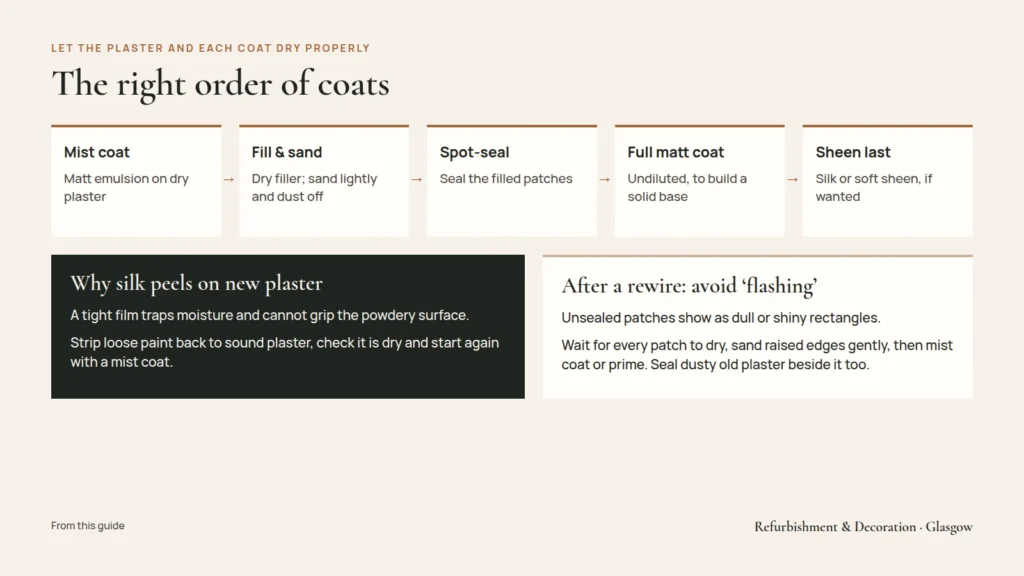
Decorator’s tip: If a wall is going to be wiped regularly, such as a kitchen or a child’s room, use a durable matt or a washable emulsion over the matt base coat. It gives you the cleaning benefit without the plastic film sitting straight on new plaster.
Painting new plaster in a tenement flat after rewiring or replastering
New plaster in a Glasgow tenement is rarely a clean slate. It is more often patches, chases and skimmed walls beside old ones, and that changes how we approach it. Our complete guide to painting a Glasgow tenement flat covers the wider preparation for older homes.
After a rewire
A rewire usually means channels cut into the walls for cables, filled and patched with plaster. Those patches dry at a different rate from the old plaster around them, and they absorb paint differently. If you paint straight over them with no seal, the patch shows through as a dull or shiny rectangle, which decorators call flashing.
- Wait until every patch is dry, not just the big ones.
- Sand any raised edges gently so the patch blends in.
- Seal patches with a mist coat or a primer, then check that the sheen looks even before the topcoats.
- Old plaster that is dusty or powdery next to the patch also needs sealing, so the whole wall takes paint evenly.
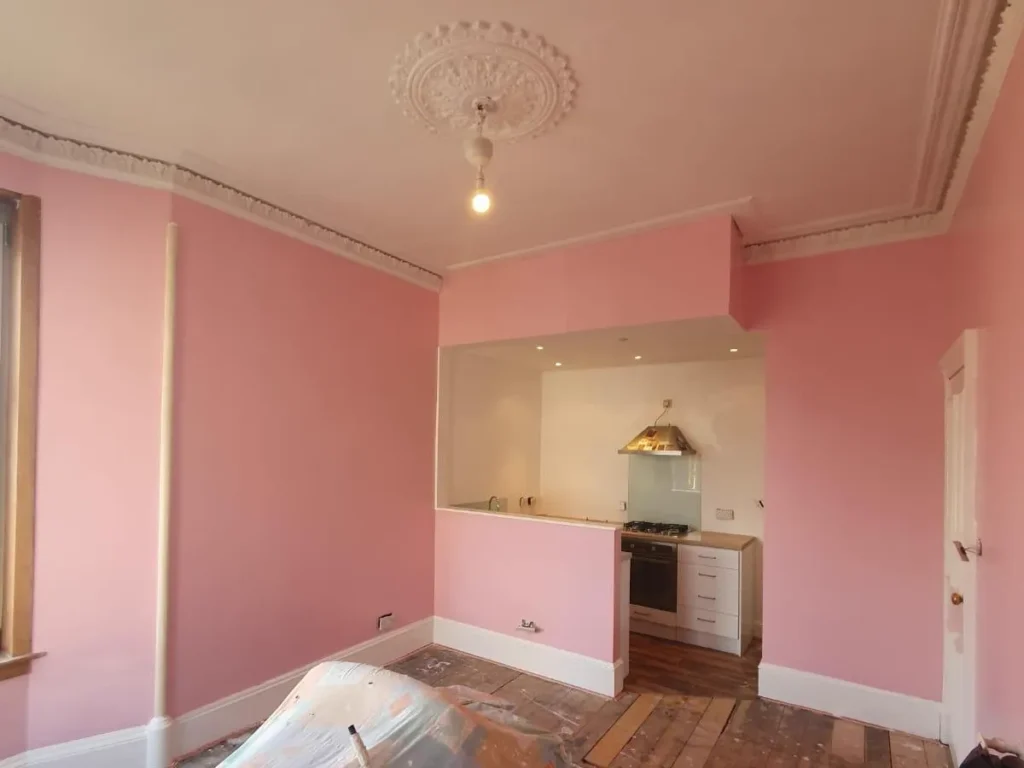
After a full replaster
Many tenement flats have lath and plaster walls and ceilings. When these are replaced or skimmed over, the new layer can be thick, and a tall, solid-walled flat dries slowly. Allow longer than you would for a thin skim on plasterboard, and watch the lower walls and external walls, which stay damp longest.
New plaster also releases a lot of water into the flat as it dries. If you see condensation on the windows or mould specks on a wall, ventilate more, and read our guide to damp, condensation and mould before deciding it is a damp problem. Painting over moisture, whether it is from drying plaster or from a leak, will not hold.
Cornice, ceiling roses and original features
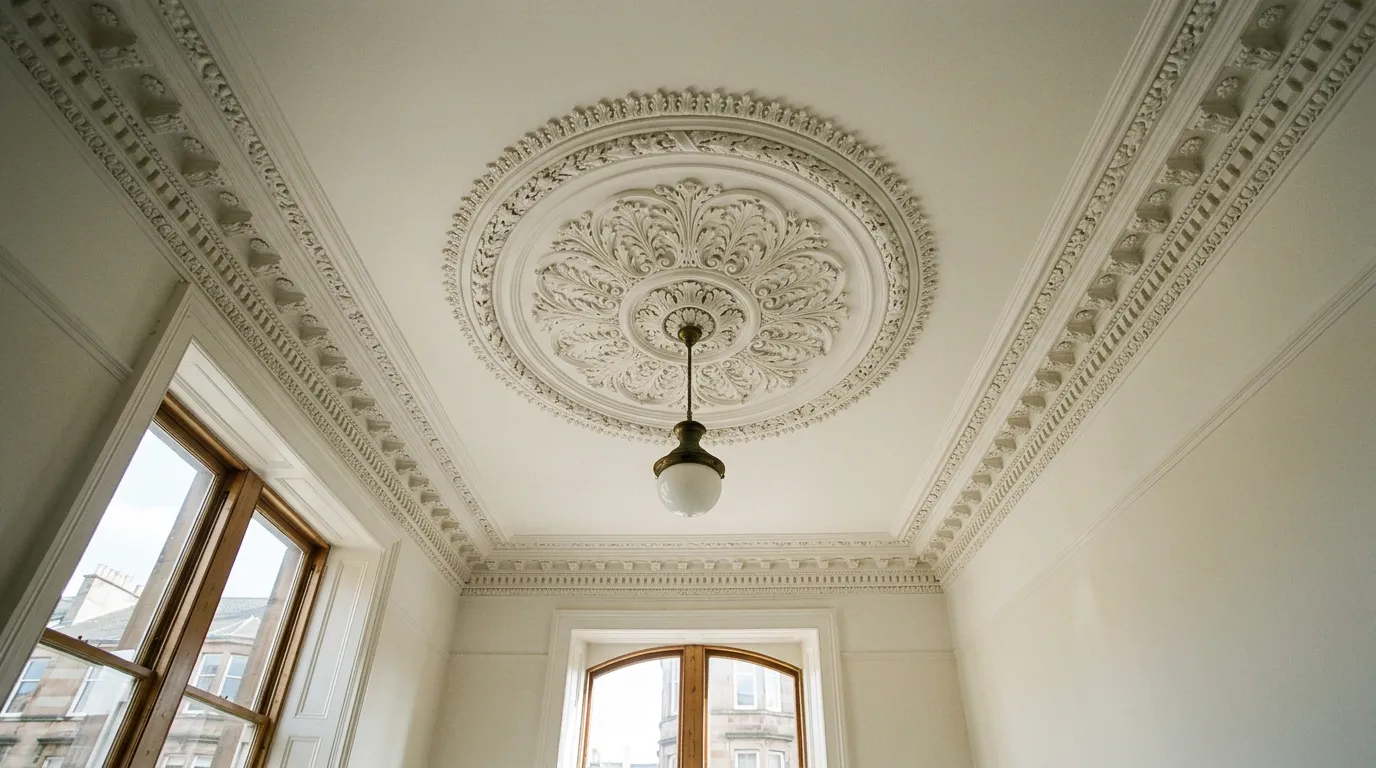
New work often meets original cornice and ceiling roses. Where new plaster butts up against old, the joint should be filled and primed before painting. For the old mouldings themselves, see our guide to restoring and painting cornicing and ceiling roses. Be careful with old paint that is being disturbed. Painted surfaces in older homes can contain lead, so ask before sanding anything that is not new work.
Can you wallpaper new plaster?
Yes, but not straight onto bare plaster. Paper pasted directly onto fresh plaster can stick so firmly that it takes the surface off when you strip it, and the plaster soaks up the paste, which weakens the bond. The usual fix is to seal the wall first.
- Size or sealer. A coat of size or a manufacturer-approved sealer closes the pores and lets you slide the paper into position. Follow the paper maker’s instructions, because they differ by paper type.
- Lining paper. On a wall that has any flaws, we line first, then paper once the lining has dried. It gives a smooth base and makes stripping easier later.
- Do not use a vinyl-based coat or a silk mist coat under paper unless the paper maker says so. The paste needs a surface it can bond to.
- Wait for the plaster to dry, just as you would before painting. Damp plaster behind paper causes stains, lifting seams and mould.
Our guide to wallpaper hanging in Glasgow covers lining and hanging in full.
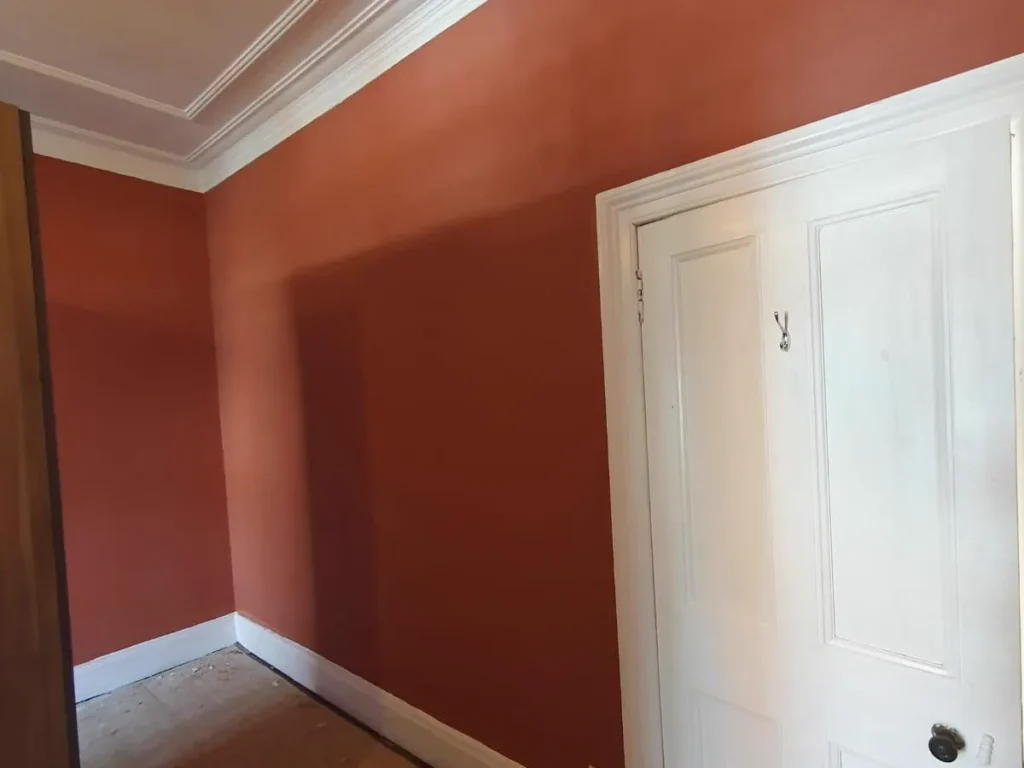
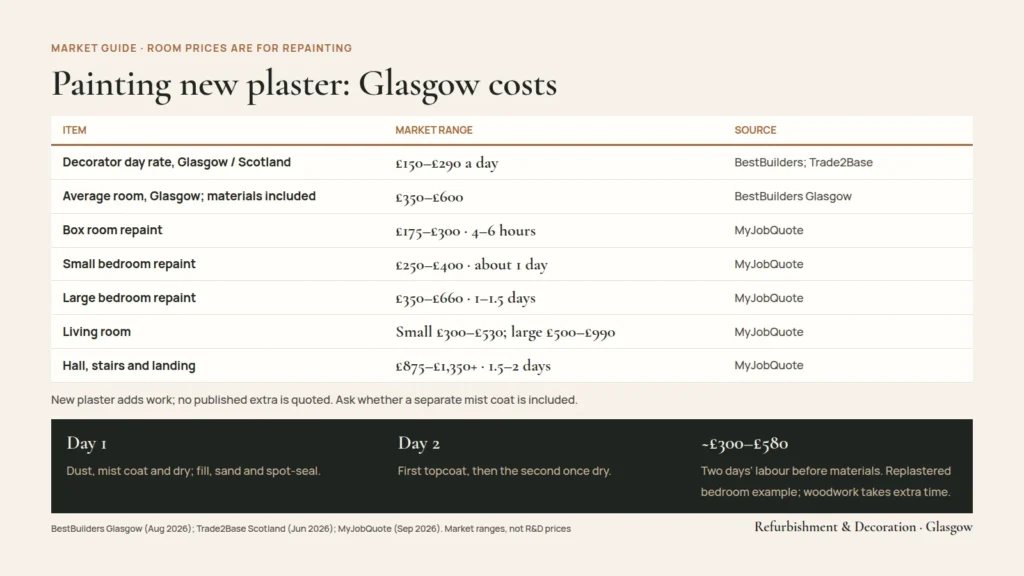
What does painting new plaster cost in Glasgow?
R&D’s own prices are not published yet, so these are market figures with their sources named. Painting new plaster takes longer than repainting a wall that has been painted before, because it needs a mist coat and drying time between coats, and often fill and sand work as well. Expect the upper end of each range, and ask whoever quotes whether the price includes a separate mist coat.
| Item | Market range | Based on |
|---|---|---|
| Decorator day rate, Glasgow / Scotland | £150–£290 a day | BestBuilders Glasgow (Aug 2026); Trade2Base Scotland (Jun 2026) |
| Average room, Glasgow, materials included | £350–£600 | BestBuilders Glasgow (Aug 2026) |
| Box room repaint | £175–£300, 4–6 hours | MyJobQuote (Sep 2026) |
| Small bedroom repaint | £250–£400, about 1 day | MyJobQuote (Sep 2026) |
| Large bedroom repaint | £350–£660, 1–1.5 days | MyJobQuote (Sep 2026) |
| Living room | £300–£530 small, £500–£990 large | MyJobQuote (Sep 2026) |
| Hall, stairs and landing | £875–£1,350+, 1.5–2 days | MyJobQuote (Sep 2026) |
The room figures above are for repainting. New plaster adds work, but there is no published market figure for the extra, so we do not quote one. The honest way to price it is to look at the walls.
Worked example: a replastered bedroom
A typical replastered double bedroom, walls and ceiling skimmed, with the plaster dry:
- Day 1: dust off, mist coat on the ceiling and walls, leave to dry. Fill and sand any flaws, then spot-seal.
- Day 2: first topcoat on the ceiling and walls, then the second topcoat once it has dried.
- Woodwork: new skirtings and architraves need priming, undercoating and gloss or satin, which is extra time on top.
On the market day rate of £150–£290, two days of labour is about £300–£580 before materials, which fits inside MyJobQuote’s range for a large bedroom. Treat it as a guide only. We give a guide price on the phone and a fixed written quote after a free visit.
Mistakes to avoid on new plaster
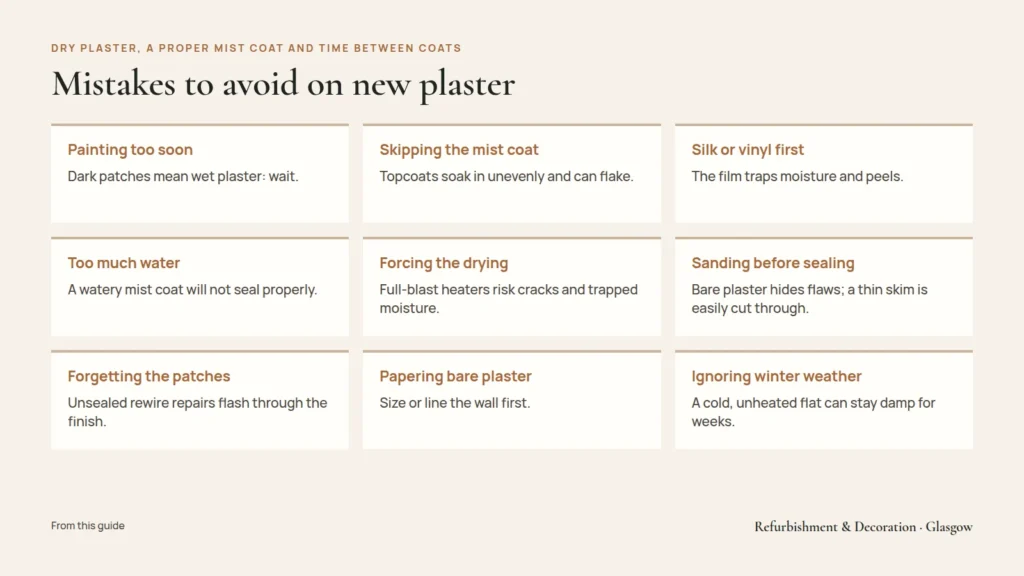
- Painting too soon. Dark patches mean wet plaster. Wait, even if the calendar says a week has passed.
- Skipping the mist coat. Straight topcoats soak in unevenly and flake. This is the most common mistake on DIY jobs.
- Using silk or vinyl as the first coat. It seals in moisture and peels.
- Thinning the paint too much. A mist coat that is too watery has no film strength and does not seal.
- Forcing the drying. Heaters and fans on full can dry the surface while the wall behind stays wet, and can crack the plaster.
- Sanding before sealing. You cannot see the flaws on bare pink plaster, and you can cut through a thin skim.
- Forgetting the patches. Rewiring chases and repairs need the same mist coat as new walls, or they flash through the finish.
- Papering straight onto bare plaster. Size or line it first.
- Ignoring the weather in winter. A cold, unheated flat can leave plaster damp for weeks.
Getting a price for your home
New plaster is a job where the decorator’s judgement saves you money, because the right order of coats avoids repainting. We can give you a guide price over the phone, then a fixed written quote after a free visit, once we have seen how dry the plaster is. See our interior painting service for what is included. We work across Glasgow and Central Scotland.
Call 07777 780557, or book a free visit.
Questions people ask
How long should new plaster dry before painting?
A thin skim over plasterboard is commonly left for about a week to ten days, longer in a cold or damp room. The reliable test is colour: it should be an even, light pink with no dark patches. Thicker backing coats, lime plaster and winter conditions all take longer, so check with your plasterer and the manufacturer's data sheet.
What is a mist coat and how do I mix one?
A mist coat is a watered-down first coat of matt emulsion that seals bare plaster so your topcoats grip and dry evenly. A common starting point is about 3 or 4 parts paint to 1 part clean water, stirred to the consistency of single cream. Ratios vary by maker, and some primers must not be thinned, so follow the tin.
Why does silk or vinyl paint peel on new plaster?
Vinyl and silk emulsions form a tight film. On fresh plaster that is still releasing moisture and is powdery and over-absorbent, the film cannot grip and traps water underneath, so it blisters or peels as the wall dries. Seal with a matt mist coat first, add a full matt coat, and only then use a sheen if you want one.
Can I wallpaper straight onto new plaster?
Not onto bare plaster. Paste soaks into it, weakening the bond, and the paper can later pull the surface off when stripped. Seal the wall first with size or a sealer the paper maker approves, or hang lining paper once the plaster is dry. Damp plaster behind paper causes stains, lifting seams and mould.
Should I sand and fill before or after the mist coat?
After. Bare pink plaster hides ridges and pinholes that show up under light once the wall is sealed. Mist coat first, fill and lightly sand what you can see, dust off, spot-seal the patches and then topcoat. Sand gently, because finishing plaster is a thin layer and it is easy to cut through it.
How much does it cost to paint new plaster in Glasgow?
There is no published market price for the extra work new plaster needs, so judge it from the base figures. A Glasgow average room is £350–£600 including materials (BestBuilders Glasgow, Aug 2026), and a decorator's day rate is £150–£290. Expect the upper end, as a mist coat adds drying time. We give a guide price by phone and a fixed quote after a free visit.

Painters and decorators working across Glasgow & Central Scotland, specialising in interior painting and wallpaper hanging. Prices in our guides are reviewed every year.
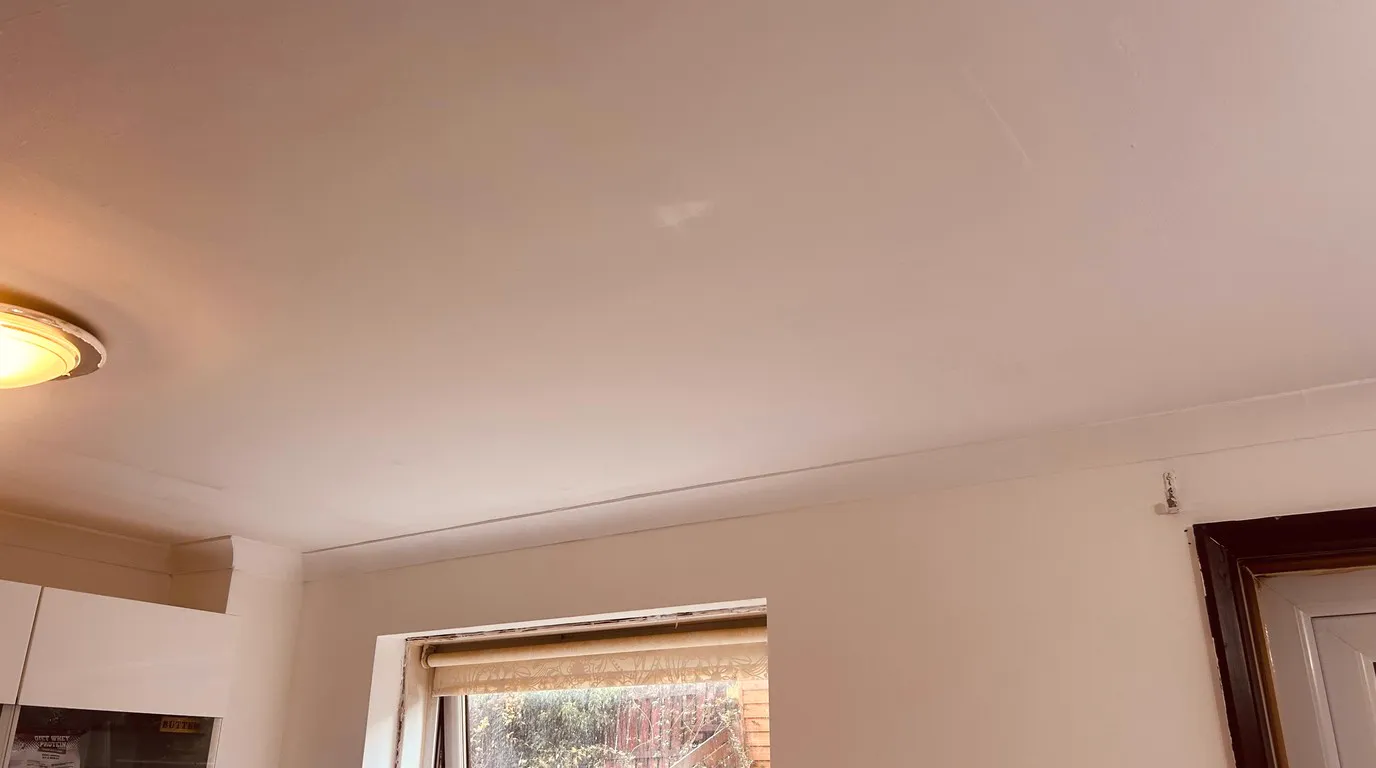 Cracked Ceiling Repair & Painting: What a Decorator Can Fix
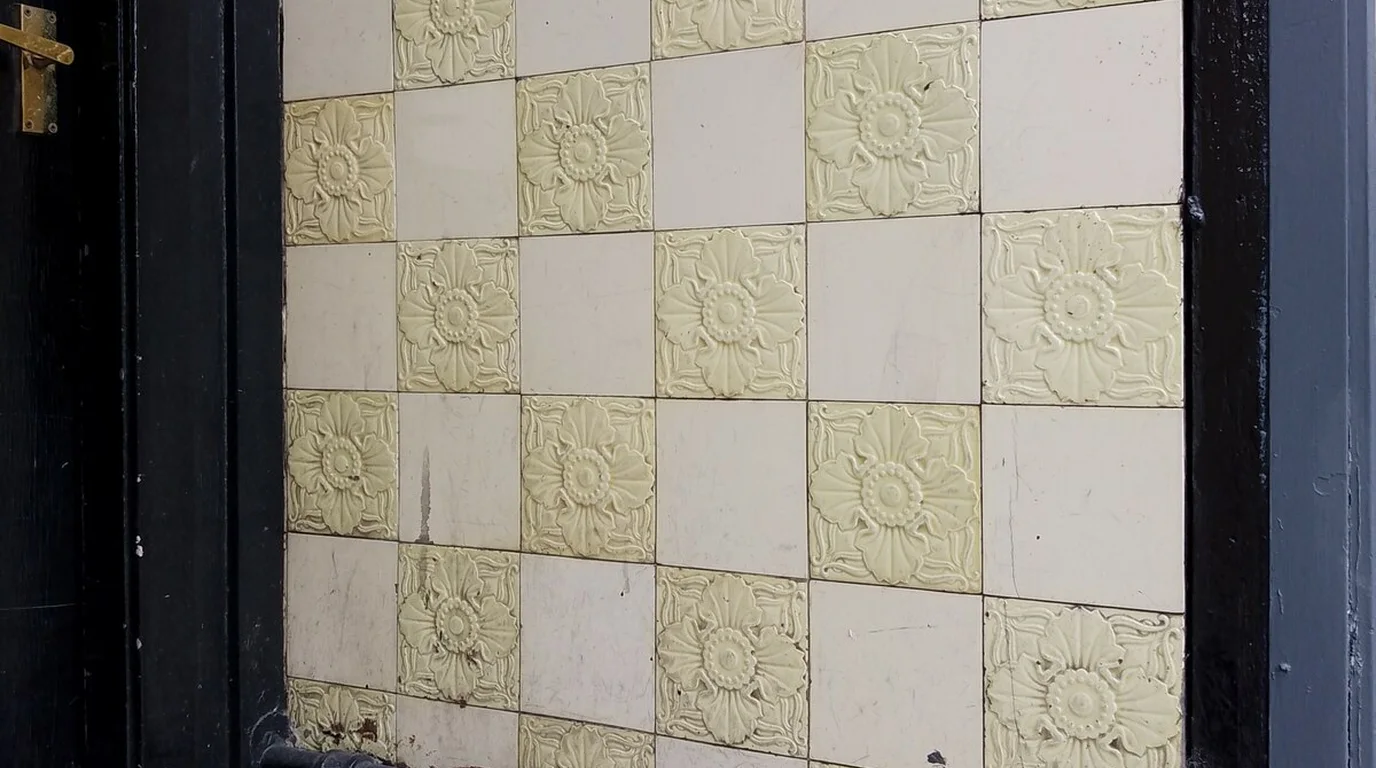 Painting a Tenement Close: Factors, Owners & Costs
 Restoring & Painting Cornicing and Ceiling Roses